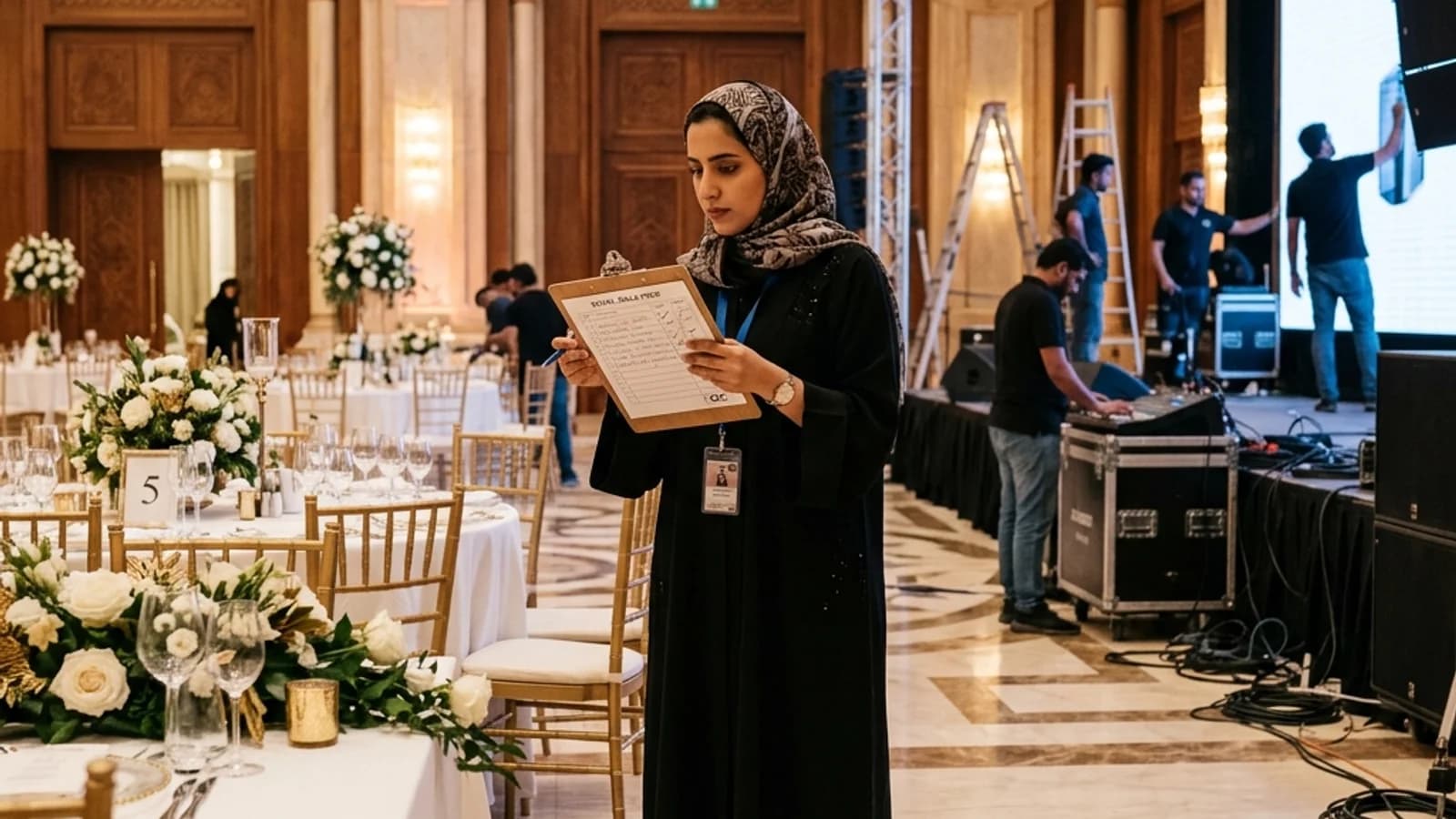
Most events do not fail because of one dramatic disaster. They fail through an accumulation of small, avoidable mistakes — a venue booked too late, a permit filed too close to the date, an AV package quietly under-specified. Individually each seems minor. Together they turn a promising event into a stressful, expensive disappointment. The good news: every one of these mistakes is predictable, and every one is preventable.
After producing events across Saudi Arabia — from corporate galas in Riyadh to destination weddings in AlUla — we have seen the same errors derail events again and again. Here are the 25 most common, grouped by phase, along with exactly how professional planners avoid each one. Treat this as your pre-event checklist.
Planning and Strategy Mistakes
Mistake 1: Choosing a venue too late. This is the single most common and most damaging error. The best venues in Riyadh, Jeddah, and AlUla book out 6–18 months ahead. Leave it late and you are choosing from leftovers, paying premium rates, or compromising your whole concept. Professionals lock the venue first, often before the design is even finalised.
Mistake 2: Starting without a clear objective. Planning an event without a measurable goal means you spend money with no way to judge if it worked. Professionals define the objective — leads, retention, brand impact — before anything else, and build every decision around it.
Mistake 3: No backup plan. Outdoor weather, vendor cancellations, equipment failure, flight delays — something always goes sideways. Amateurs hope; professionals prepare. Every serious event has contingency vendors, backup equipment, and a wet-weather plan ready before doors open.
Mistake 4: Unrealistic timelines. Underestimating how long permits, custom builds, and floral installations take leads to rushed, panicked execution. Custom florals and scenic builds often need 4–6 months. Professionals work backwards from event day with hard milestones.
Mistake 5: Trying to do everything yourself. Without experience, vendor relationships, or local knowledge, a DIY approach almost always costs more and delivers less. Professionals exist precisely because they save more than their fee through pricing, efficiency, and avoided mistakes.
Common Pitfall
The most expensive mistake of all is starting late. Nearly every other problem on this list gets worse when you are short on time — fewer options, higher rush fees, and decisions made under pressure rather than with care.
Budget Mistakes
Mistake 6: No contingency fund. Costs always shift. Without a 10–15% buffer, a single surprise forces painful last-minute cuts. Professionals build contingency in from day one.
Mistake 7: Spending on the wrong things. Pouring budget into things guests never notice while skimping on what they actually experience — food, lighting, sound, the welcome. Professionals spend where it creates impact and economise where it does not.
Mistake 8: Hidden and forgotten costs. Service charges, VAT, overtime, permits, generator fuel, and shipping quietly inflate the final bill. Professionals itemise everything upfront so there are no surprises.
Mistake 9: Choosing vendors on price alone. The cheapest quote usually means weaker quality or hidden costs that surface later. Professionals judge value and track record, not just the bottom line.
Mistake 10: Underestimating per-head catering. High-end catering in Saudi Arabia runs SAR 1,200–3,500+ per person. Multiply that across hundreds of guests and the number is large — and easy to underestimate. Professionals model F&B precisely against the final guest count.
Want a budget with no nasty surprises? We build fully itemised cost models so you see exactly where every riyal goes. Request a transparent quote for your event today.
Venue and Logistics Mistakes
Mistake 11: Ignoring technical specifications. A beautiful venue with weak power, low ceilings, or poor loading access can make your planned production impossible. Professionals check the unglamorous specs — electrics, rigging height, internet, loading docks — before signing.
Mistake 12: Underestimating remote-location logistics. An event in AlUla or NEOM is not a Riyadh event in a prettier setting. Everything must be transported in, often adding 40–60% to cost. Professionals plan generators, water, freight, and crew accommodation months ahead.
Mistake 13: Poor guest flow and layout. Bottlenecks at entrances, badly placed food stations, and unclear wayfinding frustrate guests. Professionals design circulation deliberately — wide aisles, logical flow, signage visible from every entrance.
Mistake 14: Forgetting accessibility and comfort. Inadequate parking, no shade, poor temperature control, or insufficient restrooms quietly ruin guest experience. Professionals walk the guest journey end to end before the event.
Mistake 15: No clear move-in and move-out plan. Multiple vendors arriving without a coordinated schedule causes chaos and delays. Professionals run a master logistics timeline so every delivery and build slots into place.
Permit and Compliance Mistakes
Mistake 16: Applying for GEA permits too late. Any event with live entertainment needs a GEA permit, and the process takes 4–8 weeks (10–12 for international artists). Late applications are the top cause of cancelled entertainment. Professionals file early — read our full GEA permit guide.
Mistake 17: Missing performer GEA licenses. The number one reason permits get rejected is that the performers themselves lack valid GEA licenses. Professionals verify every artist's license before booking them.
Mistake 18: Assuming someone else handles compliance. Believing the venue or agency will "just take care of it" without written confirmation. Professionals confirm in writing exactly who owns each permit and deadline.
Mistake 19: Ignoring cultural and protocol norms. Treating a Saudi event like a generic Western one — skipping Arabic coffee service, mishandling seating hierarchy, ignoring local sensibilities. Professionals weave authentic hospitality and correct protocol into the design.
Expert Tip
Before booking any performer or entertainment for a Saudi event, ask to see their valid GEA license first. This one habit prevents the most common cause of permit rejection and last-minute cancellations.
Guest Experience Mistakes
Mistake 20: Poor guest and RSVP management. Chaotic invitations, no RSVP tracking, and slow check-in create a terrible first impression. Professionals use digital RSVP systems and fast, staffed check-in to make guests feel expected.
Mistake 21: Neglecting VIP handling. Failing to plan private arrivals, lounges, seating, and discretion for senior or royal guests. Professionals build a dedicated VIP run-of-show separate from the main schedule.
Mistake 22: Overlooking the small details. Name cards, welcome gifts, signage, and thoughtful touches are what guests remember. Professionals obsess over the details that make people feel cared for.
Mistake 23: Bad scheduling and pacing. Programmes that run too long, drag, or cram too much in lose the room. Professionals pace the run-of-show with the audience's energy and attention in mind.
Production and Execution Mistakes
Mistake 24: Underestimating AV requirements. Weak sound, dim lighting, or a glitching presentation are exactly what guests remember — and the fastest way to make an expensive event feel cheap. Production deserves 15–25% of budget. Professionals never treat it as a line item to minimise.
Mistake 25: Skipping the technical rehearsal. Walking into event day without a full tech run is asking for live failures. Professionals rehearse sound, lighting, and timing at least 24 hours before doors, fixing problems before guests ever see them.
How Professionals Avoid All 25
Notice the pattern: nearly every mistake traces back to three habits — starting early, planning in detail, and respecting local expertise. Professional event planners are not magicians; they are disciplined. They lock venues first, file permits early, itemise budgets, check technical specs, rehearse obsessively, and always have a backup plan. That discipline is exactly what you are paying for, and it is what turns a risky event into a confident one.
Key Takeaways
Most events fail through small, avoidable mistakes — not single disasters. Every one on this list is preventable.
Starting late is the root cause of most other problems — lock your venue and file GEA permits as early as possible.
Spend where guests notice (food, lighting, sound, welcome) and hold a 10–15% contingency.
Respect local expertise — GEA permits, remote logistics, and cultural protocol are where amateurs get caught out.
Rehearse everything. A full technical run 24 hours before doors prevents the failures guests remember most.
Frequently Asked Questions
What is the most common event planning mistake?
Choosing a venue too late. The best venues in Saudi Arabia book out 6–18 months in advance, so leaving it late means fewer options, premium rates, or compromising your concept. Almost every other planning problem also gets worse when you are short on time.
How do professional event planners avoid mistakes?
Through three core habits: starting early, planning in detail, and respecting local expertise. They lock venues first, file permits early, itemise budgets, check technical specs, build contingency plans, and run full technical rehearsals before every event.
How much contingency should I budget for an event?
Hold a 10–15% contingency fund. Costs almost always shift during planning, and without a buffer a single surprise forces painful last-minute cuts to quality. Professionals build contingency in from day one.
Why is AV the most underestimated part of event planning?
Because first-time planners treat it as a cost to minimise, when weak sound, dim lighting, or a glitching presentation are exactly what guests remember. Production deserves 15–25% of budget. The best production is invisible — guests feel immersed without noticing the technology.
What permit mistakes do event planners make in Saudi Arabia?
The three biggest are applying for GEA permits too late (the process takes 4–8 weeks), booking performers who lack valid GEA licenses (the top cause of rejection), and assuming the venue or agency handles compliance without written confirmation of who owns each deadline.
How early should I start planning to avoid mistakes?
For major events, start 8–12 months ahead in Riyadh or Jeddah and 12–18 months for AlUla destination events. Custom florals and scenic builds need 4–6 months, and GEA permits 4–8 weeks. Early starts give you options, leverage, and time to plan with care rather than panic.
Is it a mistake to plan a large event without a professional planner?
For anything above a modest scale, usually yes. Without vendor relationships, local knowledge, and experience, a DIY approach typically costs more and delivers less. A good planner saves more than their fee through preferred pricing, efficiency, and avoided mistakes.
How do I make sure my event has a good backup plan?
Identify what could go wrong — weather, vendor cancellation, equipment failure, talent no-show — and prepare for each. Line up contingency vendors, backup equipment, and a wet-weather option, and agree a clear chain of command for fast decisions on the day.
Want to plan an event with none of these mistakes? Our team brings the discipline, vendor network, and local expertise that prevent every problem on this list. Let experts handle every detail — contact Saudi Event Management for a free consultation.
Ready to Plan Your Event?
Our team delivers events across Saudi Arabia — from Riyadh to AlUla.
Get a Free Consultation