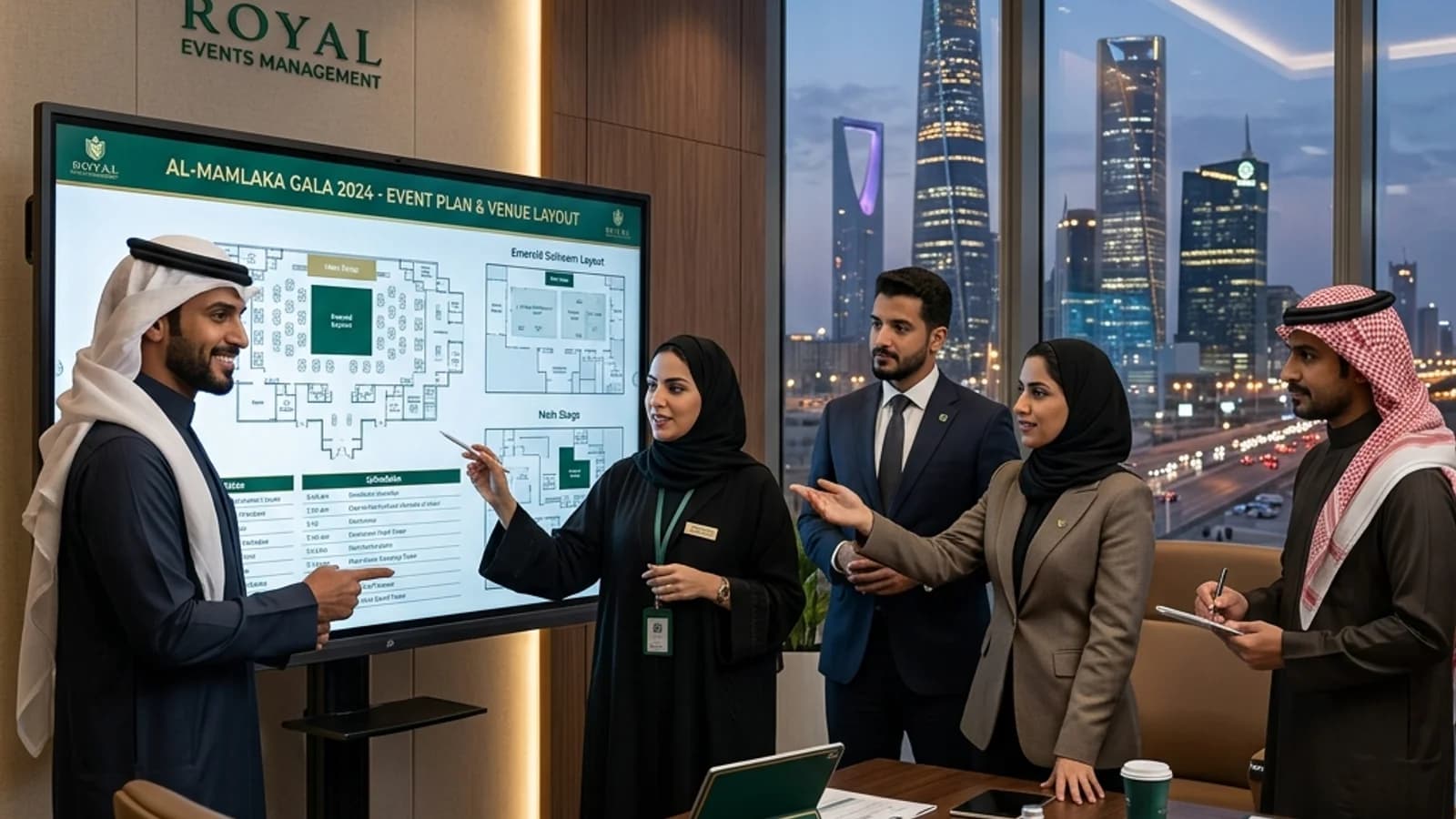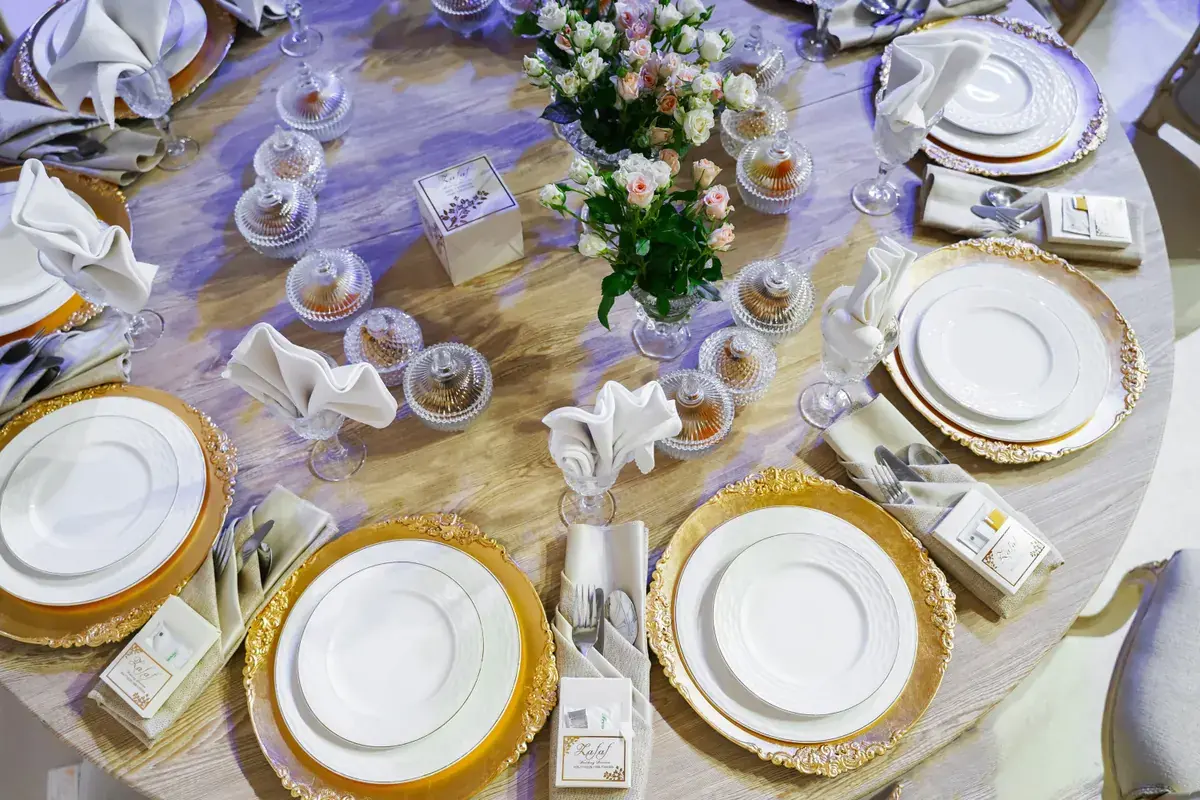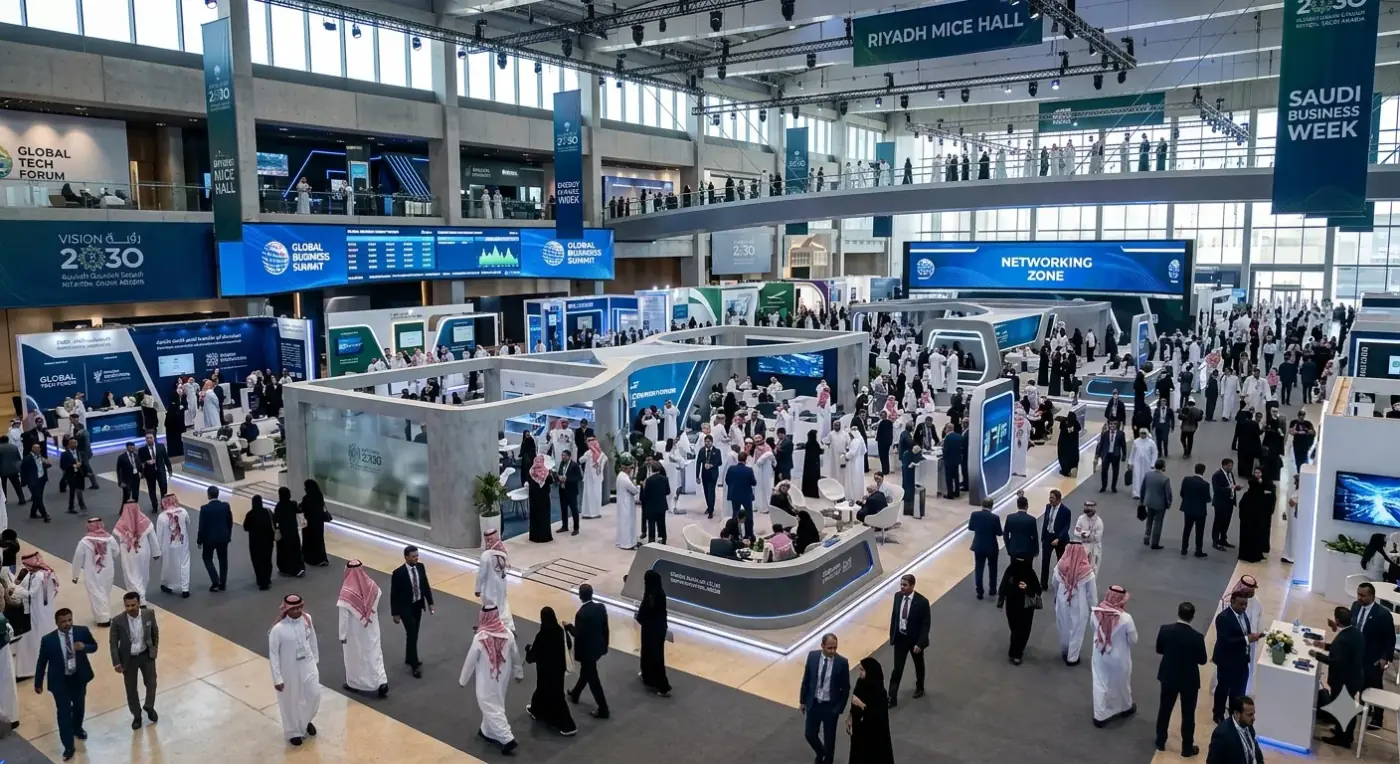
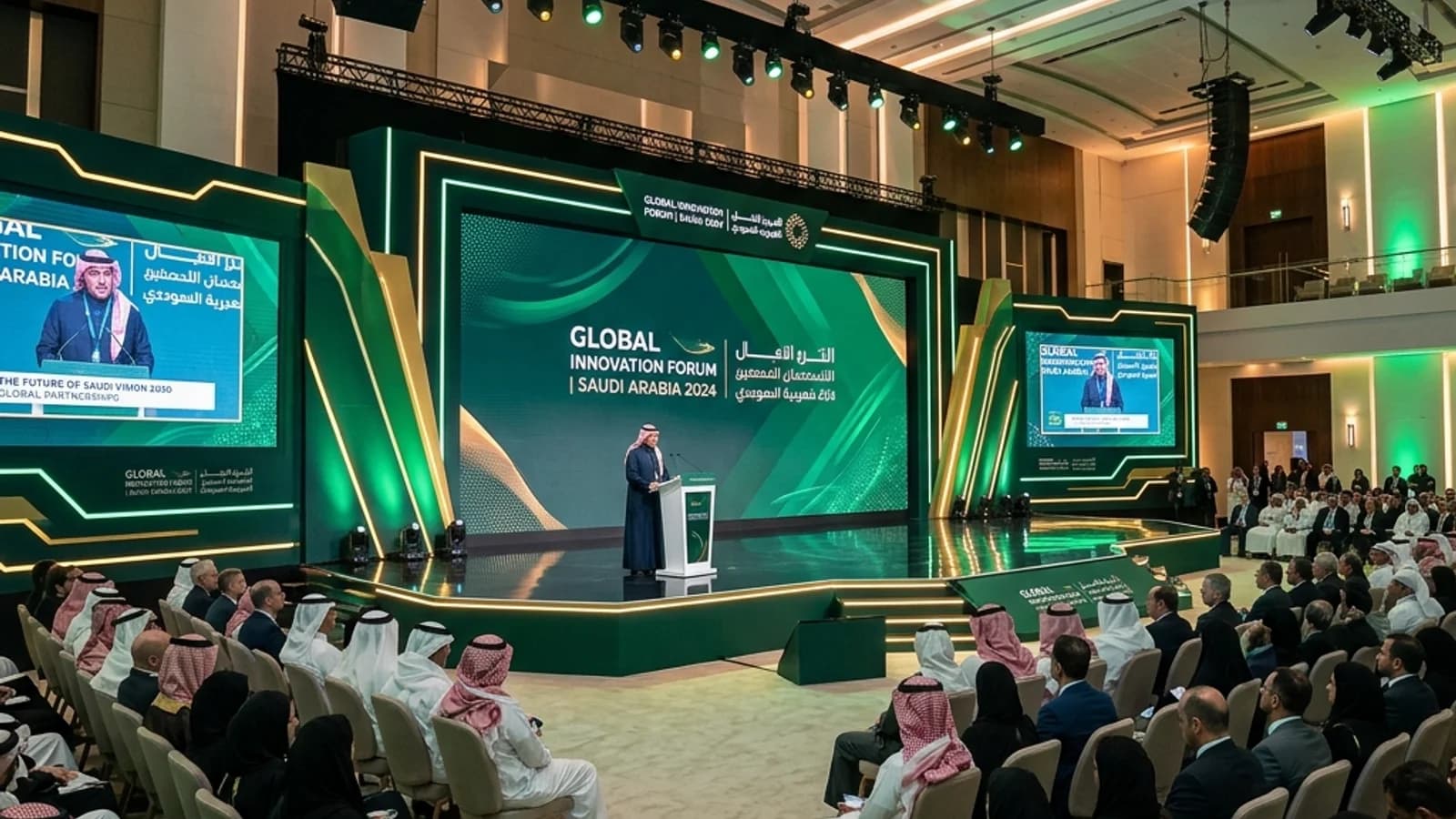
A corporate event is never just a gathering. Done well, it closes deals, launches products, strengthens culture, and positions your brand as a leader. Done badly, it quietly damages all four. In Saudi Arabia — where audiences now expect Riyadh Season-level production and where GEA permits and cultural protocol add real complexity — the gap between a great corporate event and a forgettable one comes down to process.
This guide walks through that process step by step, from the first strategic decision to the final post-event report. Whether you are planning an executive summit at KAFD, a product launch in Jeddah, or an awards gala at the Ritz-Carlton, follow these stages and you will avoid the mistakes that derail most business events. Let us begin where every successful event begins: with a clear reason to exist.
Why Corporate Events Matter More Than Ever
Under Vision 2030, Saudi Arabia has become one of the most competitive corporate markets in the world. International companies are establishing regional headquarters, government entities are hosting global summits, and brands are fighting for attention in a crowded landscape. In that environment, a well-produced corporate event is one of the most powerful tools a company has.
Events do what advertising cannot. They create face-to-face trust, generate press and social momentum, and give your most important relationships a reason to be in the room. A summit positions you as an authority. A gala builds loyalty among staff and clients. A launch creates a moment the market talks about. But none of that happens by accident — it happens through disciplined planning.
Industry Insight
The most successful corporate events in the Kingdom share one trait: they start with a measurable business objective, not a date and a venue. Everything else — budget, design, guest list, production — is built backwards from that goal.
Step 1: Set Clear Event Objectives
Before you think about venues or themes, answer one question: what must this event achieve? Be specific and measurable. "Raise brand awareness" is too vague. "Generate 50 qualified leads," "announce our regional expansion to 30 key journalists," or "strengthen retention among our top 200 clients" are objectives you can design toward and measure afterwards.
Define your audience just as precisely. A board-level summit for 40 executives demands a completely different design from a 2,000-person conference. Once your objective and audience are clear, every later decision — venue size, format, catering, production level — becomes far easier and far cheaper, because you stop spending on things that do not serve the goal.
Expert Tip
Write your objective at the top of every planning document and budget line. Whenever a decision or expense comes up, ask: does this serve the objective? If not, cut it. This single discipline keeps events focused and on budget.
Step 2: Build the Budget and Timeline
With objectives set, build a realistic budget and work backwards from event day. For premium corporate events, a useful starting allocation looks like this:
| Budget Category | Typical Share of Total |
|---|---|
| Venue & F&B | 40–55% |
| Production & AV | 15–25% |
| Décor & branding | 10–20% |
| Talent & entertainment | 5–15% |
| Staffing, security & permits | 5–10% |
| Contingency | 10% |
Your timeline matters as much as your budget. For a major corporate event, secure your venue 6–8 months in advance — longer during Riyadh Season. File your GEA permit 4–8 weeks out if there is any live entertainment. Lock your design and production sign-offs at least a month before to leave room for builds and rehearsals.
Step 3: Choose the Perfect Venue
The venue sets the tone, controls the budget, and dictates the logistics. Choose it against your objective and guest count, not just its prestige. For large summits, the KAFD Conference Center offers 3,000-plus capacity with built-in 4K LED. For high-protocol board meetings, the Four Seasons delivers privacy and panoramic views. For galas, the Ritz-Carlton's palace setting is unmatched. For conferences and exhibitions, dedicated centres like RICEC handle scale and complex builds.
When you evaluate a venue, check the unglamorous essentials: power distribution, loading access, ceiling height for rigging, internet capacity, breakout space, and parking. A beautiful ballroom with weak infrastructure will quietly sabotage your production. Read our guide to Riyadh's best corporate venues for a detailed comparison.
Common Pitfall
Booking a venue purely on aesthetics without confirming technical specs. Under-powered electrics, low ceilings, or poor loading access can make your planned production impossible — and force expensive last-minute compromises.
Need help matching your event to the right Riyadh or Jeddah venue with the right specs? Our team holds preferred relationships with the Kingdom's leading venues. Request a consultation and we will shortlist the perfect fit for your brief.
Step 4: Branding and Stage Design
Your stage is your brand's billboard for the entire event. Strong corporate event production translates your brand into a physical, immersive environment — through scenic design, LED content, lighting, and signage that feels intentional rather than generic. Every touchpoint, from the registration backdrop to the main stage to the digital screens, should reinforce a single, coherent visual story.
In Saudi Arabia, the most effective corporate branding blends modern production with authentic cultural design — Najdi motifs, Arabic calligraphy rendered in light, and a palette drawn from the local landscape. This signals that your brand understands and respects its audience, which matters enormously to Saudi guests. Avoid the trap of copying a generic Western conference aesthetic that could be anywhere.
Step 5: Guest Registration and VIP Management
First impressions form at the door. A slow, chaotic check-in undermines even the most polished event. Invest in a smooth registration system: pre-event digital invitations, fast on-site check-in (increasingly facial-recognition or QR-based), clear wayfinding, and enough trained staff to prevent queues. The goal is for guests to feel expected and looked after from the moment they arrive.
VIP management deserves special attention in the Kingdom, where events often include government officials, senior executives, or royalty. Plan for private arrivals, dedicated lounges, correct seating hierarchy, security coordination, and discretion. Mishandling protocol with a senior guest can overshadow an otherwise flawless event. If your guest list is sensitive, work with a partner experienced in VIP and private events.
Expert Tip
Build a dedicated VIP run-of-show separate from the main schedule, naming who greets each VIP, where they sit, and who is their point of contact. This level of preparation is invisible to most guests but unmistakable to the VIPs themselves.
Step 6: AV, Lighting, and Technology
Production is where corporate events are won or lost, and it is the area first-time planners most often underestimate. For a serious event you will need professional sound (line-array for larger rooms), LED walls or projection, intelligent lighting, and reliable presentation playback. For events with international audiences, high-quality live streaming and hybrid capability are now standard expectations, not extras.
Budget realistically: production typically consumes 15–25% of a premium corporate event. For exact figures, see our event production cost guide. And remember the golden rule of production — the best technology is invisible. Guests should feel immersed and engaged without ever noticing the equipment making it happen.
Common Pitfall
Treating AV as a line item to minimise. Weak sound, dim lighting, or a glitching presentation are exactly what guests remember. Underspending on production is the fastest way to make an expensive event feel cheap.
Step 7: On-Site Execution
All the planning in the world means nothing without disciplined execution. The backbone of event day is a detailed run-of-show — a minute-by-minute schedule naming every cue, every responsible person, and every transition. Combine it with a clear chain of command so that when a decision is needed fast, everyone knows who makes it.
Two non-negotiables: a full technical rehearsal at least 24 hours before doors, and authentic Saudi hospitality woven throughout — proper Arabic coffee service, a warm welcome, and cultural touches that show respect. The rehearsal catches the sound, lighting, and timing issues that always surface; the hospitality is what makes Saudi guests feel the event was made for them.
Planning a corporate event and want a production team that rehearses obsessively and executes calmly? That is exactly how we work. Book a discovery call to discuss your event.
Step 8: Post-Event Reporting
The event is not over when the lights go down. Professional corporate event management closes the loop with a post-event report that measures results against the objectives you set in Step 1. Capture the metrics that matter — leads generated, attendance and engagement, press and social reach, survey feedback — and translate them into clear ROI.
Just as important, hold a debrief while memories are fresh. What worked? What would you change? Documenting these lessons turns every event into an asset that makes the next one better, cheaper, and smoother. The companies that consistently produce great events are the ones that treat reporting as seriously as planning.
Key Takeaways
Start with a measurable objective, not a date and a venue — everything else is built backwards from the goal.
Budget and timeline discipline matters — secure venues 6–8 months out and file GEA permits 4–8 weeks ahead.
Choose venues on specs, not just looks, and treat production as a core investment, not a cost to minimise.
Smooth registration and VIP protocol shape first impressions and protect your most important relationships.
Close the loop with post-event reporting that measures results against your original objectives.
Frequently Asked Questions
What are the steps in planning a corporate event in Saudi Arabia?
The core steps are: set measurable objectives, build the budget and timeline, choose the right venue, design branding and stage, organise registration and VIP management, plan AV and technology, execute on-site with a detailed run-of-show, and close with post-event reporting. Each stage builds on the objective you define first.
How much does corporate event planning cost in Saudi Arabia?
A polished corporate conference typically runs SAR 250,000–1,200,000, while a corporate gala or awards night ranges SAR 600,000–3,000,000, depending on guest count, venue, and production. Venue and F&B usually take 40–55% of budget and production 15–25%. Always include a 10% contingency.
How far in advance should I plan a corporate event?
Secure your venue 6–8 months ahead — longer during Riyadh Season (October–March) when demand peaks. File GEA permits 4–8 weeks out for any live entertainment, and lock design and production sign-offs at least a month before the event to allow for builds and rehearsals.
Do I need a GEA permit for a corporate event?
You need a General Entertainment Authority permit if your corporate event includes live music, performers, or public entertainment. A standard business meeting or conference with no entertainment usually does not. The application takes 4–8 weeks, so start early.
What makes a corporate event successful in Saudi Arabia?
A clear objective, the right venue, strong production, smooth registration, correct VIP protocol, and authentic Saudi hospitality. The most common differentiator is treating the event as a strategic tool with measurable goals rather than just a gathering — and rehearsing execution thoroughly.
How important is AV and production for corporate events?
Critical. Production typically consumes 15–25% of a premium corporate budget, and weak sound, lighting, or presentation playback are exactly what guests remember. The best production is invisible — guests feel immersed without noticing the technology. Underspending here makes an expensive event feel cheap.
How do you handle VIP guests at corporate events?
Plan a dedicated VIP run-of-show covering private arrivals, lounges, correct seating hierarchy, security coordination, and discretion. In Saudi Arabia, events often include government officials or senior executives, so protocol must be handled by an experienced team. Mishandling a VIP can overshadow an otherwise flawless event.
What should a post-event report include?
Measure results against your original objectives: leads generated, attendance and engagement, press and social reach, and survey feedback, translated into clear ROI. Pair it with a team debrief capturing what worked and what to improve. This turns each event into a learning asset for the next one.
Ready to Plan Your Event?
Our team delivers events across Saudi Arabia — from Riyadh to AlUla.
Get a Free Consultation